Recording Sounds at the Plaisance of The 1893 World's Columbian
Exposition
By Doug Boilesen, May 2026
Gilman's Remarkable Cylinder Recordings Collection from 1893.
The World's Columbian Exposition of 1893 was like no other with its exhibits and monumental buildings which were illuminated at night by thousands of electric lights. Its fame was world-wide and was known as the "White City." The "Midway" of the fair was known as the Plaisance.
The "White City" was mostly destroyed after the fair closed but one of the remarkable things to have survived are recorded sounds collected by Benjamin Ives Gilman from Plaisance entertainers under the sponsorship of Mary Hemenway. The Library of Congress's title for these cylinder phonograph records from the Federal Cylinder Project is "Benjamin Ives Gilman collection: 1893 World's Columbian Exposition.
The Library of Congress summarizes this collection, as follows:
Collection of recordings of performances at the World's Columbian Exposition, Chicago, Illinois in 1893. Includes 40 cylinders of Fijian, Samoan, and Uvean (Wallis Island) music; 34 cylinders of Javanese and Sundanese music, songs, dances, and gamelan tunings, as well as several Euroamerican melodies; 9 cylinders of Turkish and Syrian/Lebanese vocal and instrumental music; and 18 cylinders of Kwakiutl songs recorded by Benjamin Ives Gilman under the sponsorship of Mary Hemenway.
Notes: Recorded at the Samoan Exhibit, Java Village, Turkish Theatre, and at an unidentified location (probably the Indian Village) at the 1893 World's Columbian Exposition, Chicago, Illinois by Benjamin Ives Gilman, September 1893; some cylinders are undated...In multiple languages including Kwakiutl, Turkish, Sundanese, and others. (Gilman, Benjamin Ives, Collector, et al. Benjamin Ives Gilman World's Columbian Exposition collection. 1893. Web Page. Retrieved from the Library of Congress.)
<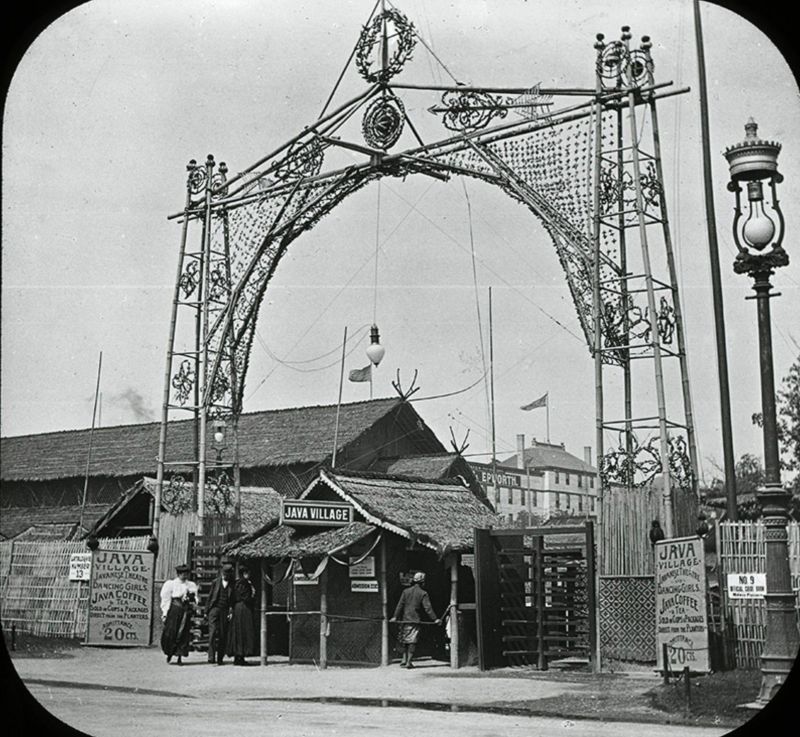
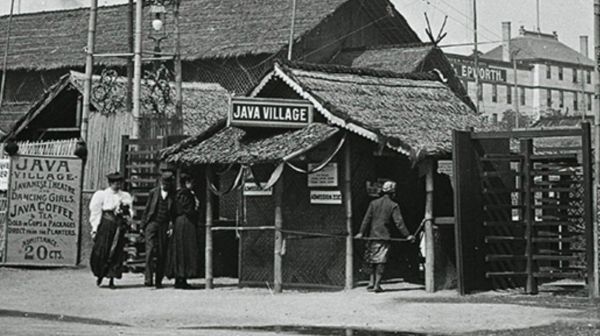
Entrance to the Java Village, looking southeast on the Midway Plaisance. [Image from the Art, Architecture and Engineering Library, Lantern Slide Collection, University of Michigan Library.
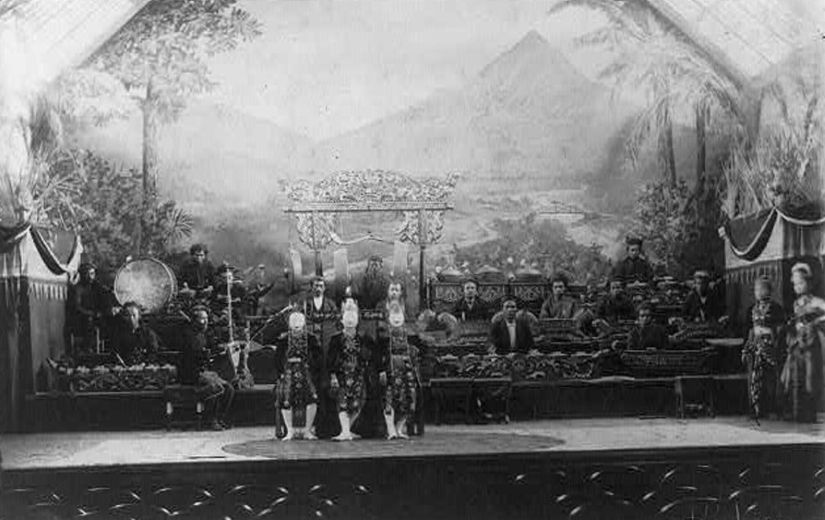
Inside the Java Theater, Gamelan Players Accompanying Mask Dancers (Wayang Topeng) at the World’s Columbian Exposition, 1893 Chicago. ("Midway to Java: The Forgotten Javanese Village in Chicago that Once Thrilled America" by Ted C. Fishman, February 8, 2021).
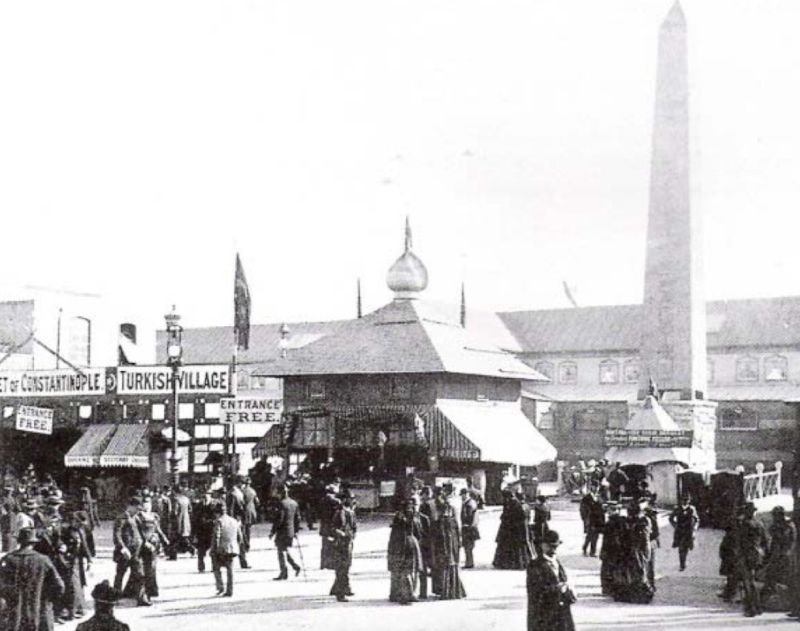
Turkish Village on the Midway Plaisance, World's Columbian Exposition, 1893 Chicago
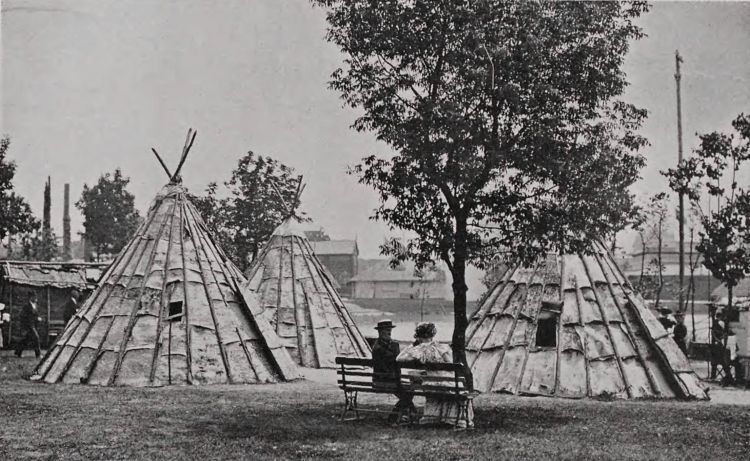
Birch Bark Huts of Penobscot Indians, WCE Exhibit, The Book of the Fair, Columbian Exposition 1893 by Hubert Howell Bancroft, The Bancroft Co. Publishers, 1895.
For more details about these recordings made by Gilman at the 1893 World's Columbian Exposition, see Patrick Feaster's excellent essay "The Benjamin Ives Gilman Collection Recorded at the 1893 World's Columbian Exposition at Chicago (1893) -- Added to the National Registry: 2014.
The 1893 World's Columbian Exhibition's "Midway Plaisance"
The Fair's area known as the "Midway Plaisance" was promoted as the "highway of nations" and it would have been the home for most of the performers who were captured on cylinder records by Gilman in 1893.
The previous country lane was replaced for this Fair "by a well-paved boulevard, 150 feet in width; the maples and
young elm trees have disappeared to make room for Irish, German, Turkish, Austrian, Chinese, Japanese, Dahomey, Javanese and Indian
villages, castles, towers, pavilions, pagodas, mosques, and a display of oriental and occidental architecture more varied than was ever witnessed
by man before within the limits of a morning’s promenade. Something of the kind had been attempted in Paris at the last two universal expositions held in that city, a portion of the Champ de Mars having been devoted to similar displays, but in comparison with Midway Plaisance
these were simply attempts. If the attractions of Midway Plaisance were stretched out in a straight line they would extend a distance of no
less than six miles." ("The Official Guide to the Midway Plaisance", compiled by John J. Flinn, 1893 - Library of Congress.)
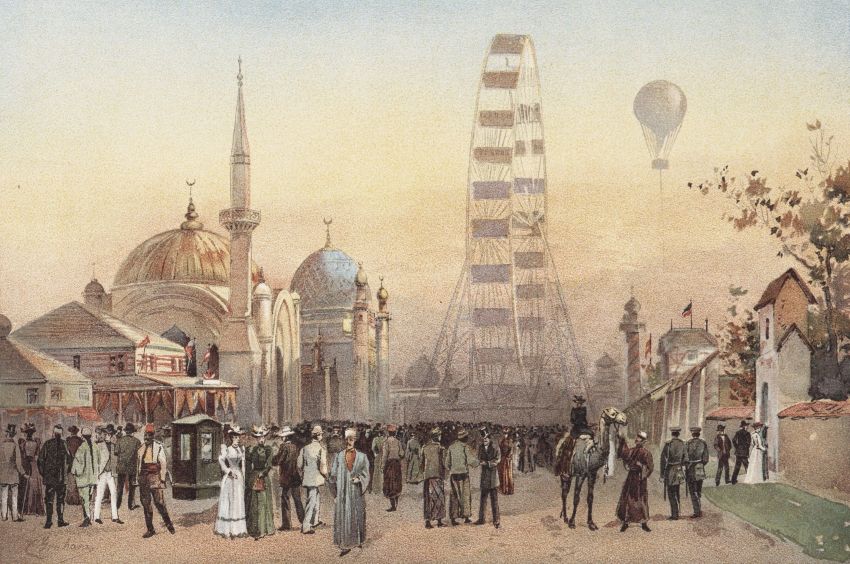
"Along the plaisance" by Charles Graham, 1893 (Yale Library).
(Graham was the official artist of the 1893 Worlds Columbian Exposition).
The following are some examples of "ethnic" types from "Portrait Types of the Midway Plaisance" by Prof. Putnam, 1894 (Courtesy Internet Archive). Performers and musicians have been selected for this page but have no known relationship with any of the surviving cylinder records. Actual songs and recordings made by Gilman in 1893, however, were from people like those shown who performed at the fair and were from the same countries and regions as those who were recorded. The stereotypes and racism inherent in most of these images and descriptions of Putnam's "Portrait Types" are included, and accordingly are part of Phonographia's Disclaimers.
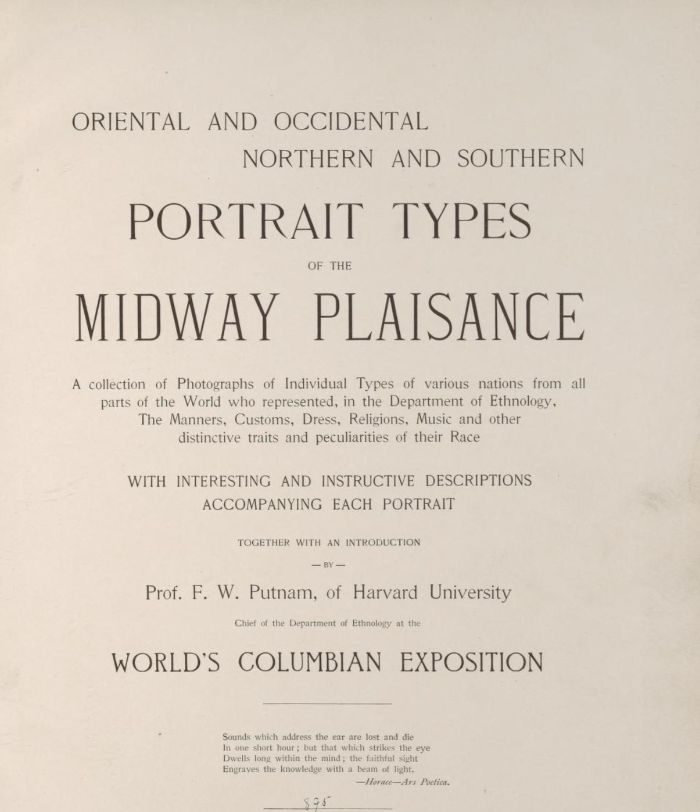
Today there is some irony in Horace's "Ars Poetica" excerpt being on the cover of the Official Guide in 1893 since we know how many articles had already been written about the phonograph's future. One of its most common accolades in 1893 was its ability to preserve songs and words so that even the dead could now speak. As Edison wrote in 1878 "For the purpose of preserving the sayings, the voices, and the last words of the dying member of the family -- as of great men--the phonograph will unquestionably outrank the photograph". Quoting Horace's "Sounds which address the ear are lost and die" was poetic, but Horace wrote that circa 19 BCE -- Putnam was writing his book in 1893, the age of Edison, the "White City" and its fair's millions of visitors who could experience new wonders like the phonograph which was at the fair in exhibits and in its coin-in-the slot phonographs. (See The World's Columbian Exposition of 1893 and the Phonograph for more details.)
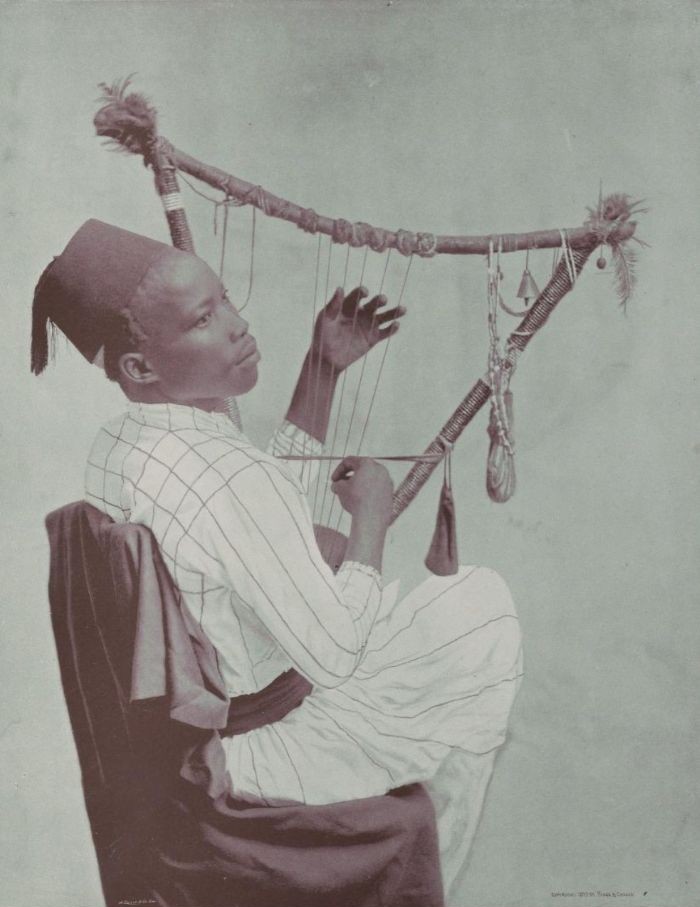
Abal Kadar (Southern Soudan) of the Midway Plaisance" by Prof. Putnam, 1894.
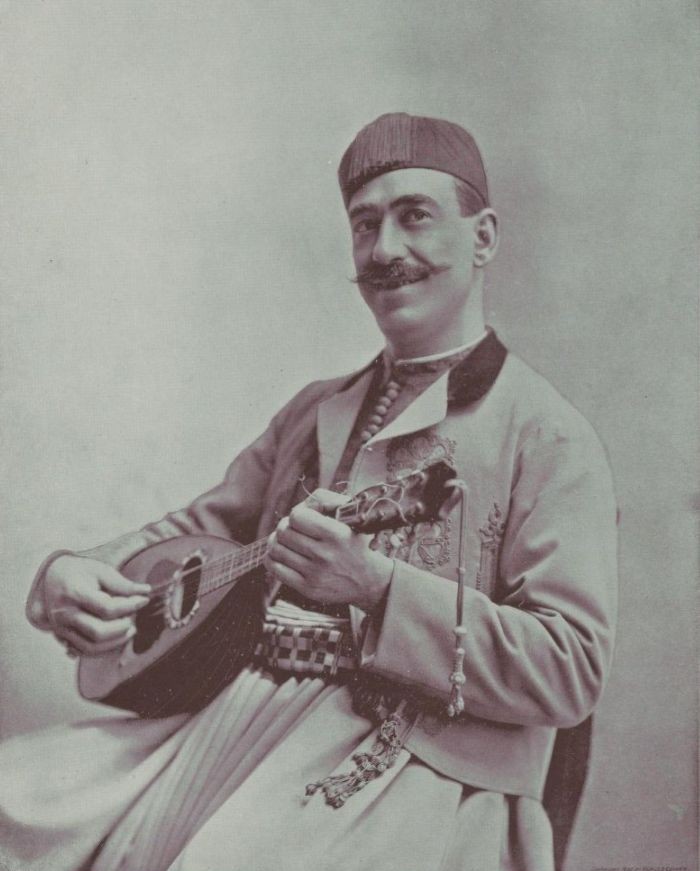
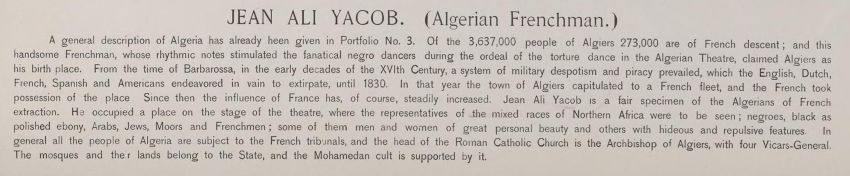
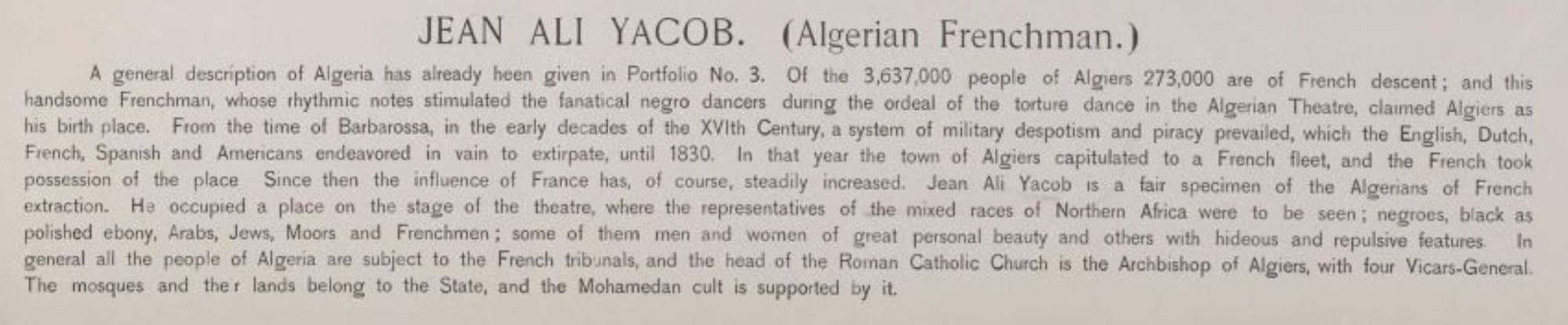
"Jean Ali Yacob of the Midway Plaisance" by Prof. Putnam, 1894.
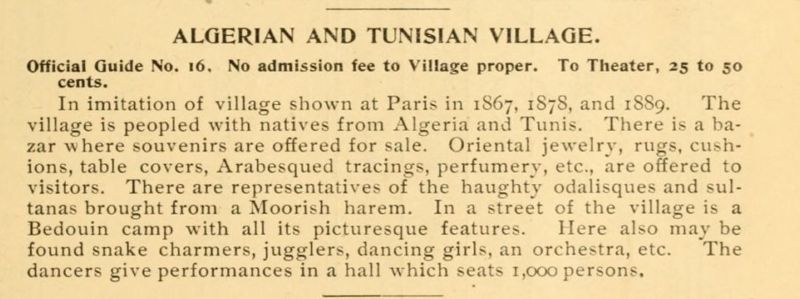
(Ibid., Flinn, Official Guide to Midway Plaisance, p. 23, LOC).
"Natives" on exhibit from Sumatra, Borneo, Samoa, Fiji, New Zealand, Tonga and Hawaii.
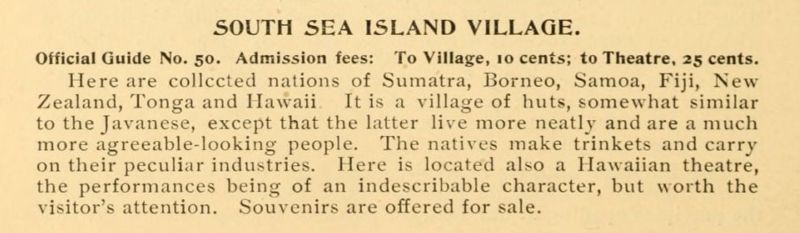
(Ibid., Flinn, Official Guide to Midway Plaisance, p. 46, LOC).
"Five Samoan Warriors in a Character Song
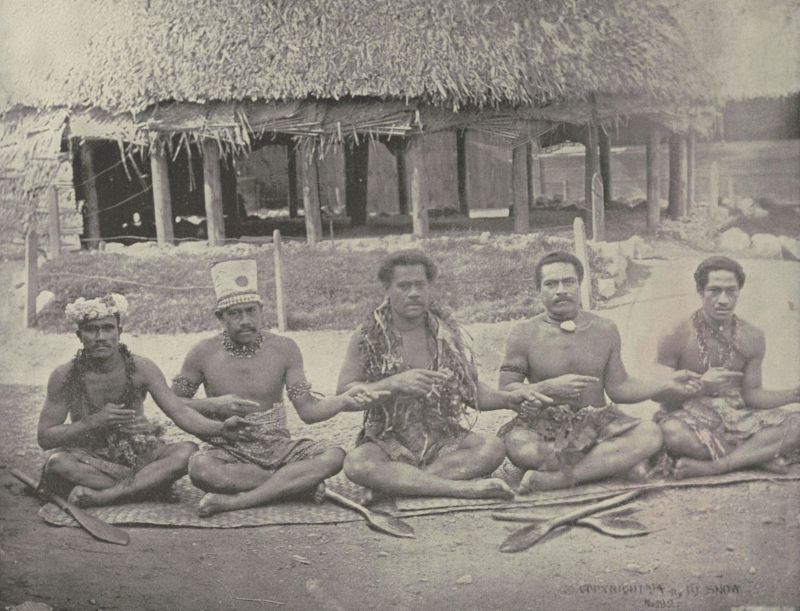
"There was a theatre in the village where the Samoans were, and they gave daily performances of no mean character. It consisted of songs and choruses and was accompanied with much clapping of palms and graceful movements, all in excellent time." The Great White City - A Picture Gallery of the World's Fair and Midway Plaisance, Pub. by Syndicate Trading Co., Part 3, 1894, LOC.
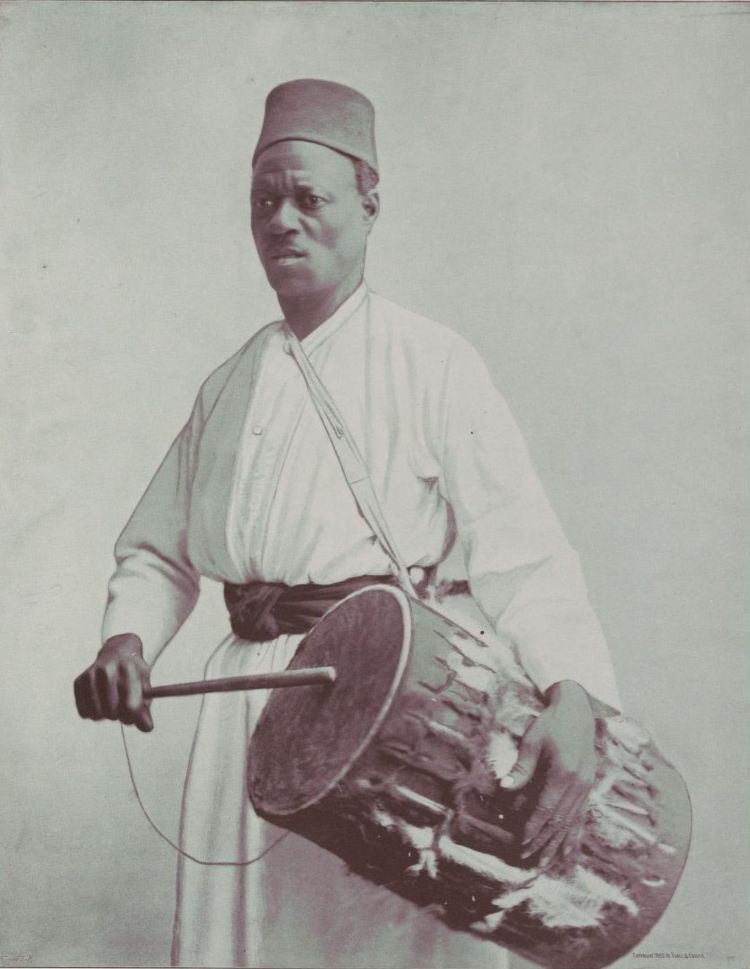
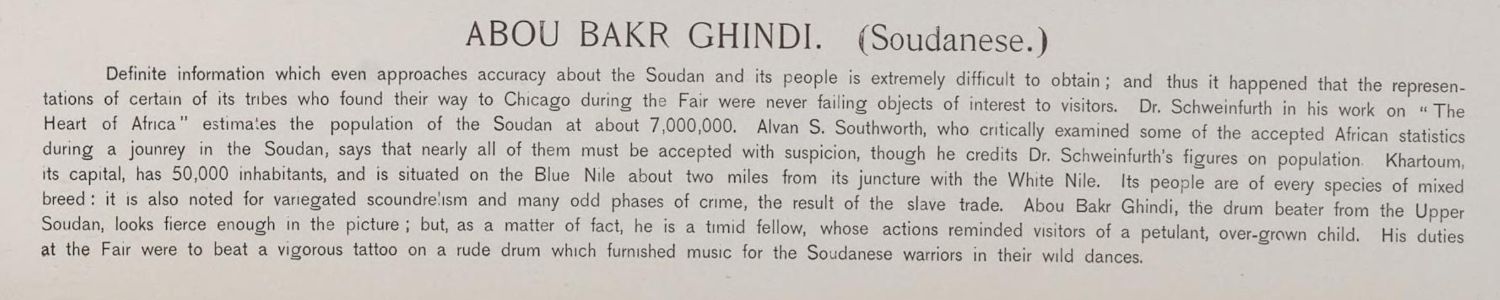
Abou Bakr Ghindi (Soudanese.)
Abou Bakr Ghindi (Soudanese),"the drum beater from the Upper Soudan, looks fierce enough in the picture; but, as a matter of fact, he is a timid fellow, whose actions reminded visitors of a petulant, over-grown child. His duties at the Fair were to beat a vigorous tattoo on a rude drum which furnished music for the Soudanese warriors in their wild dances." (Ibid, by Prof. Putnam, 1894.)
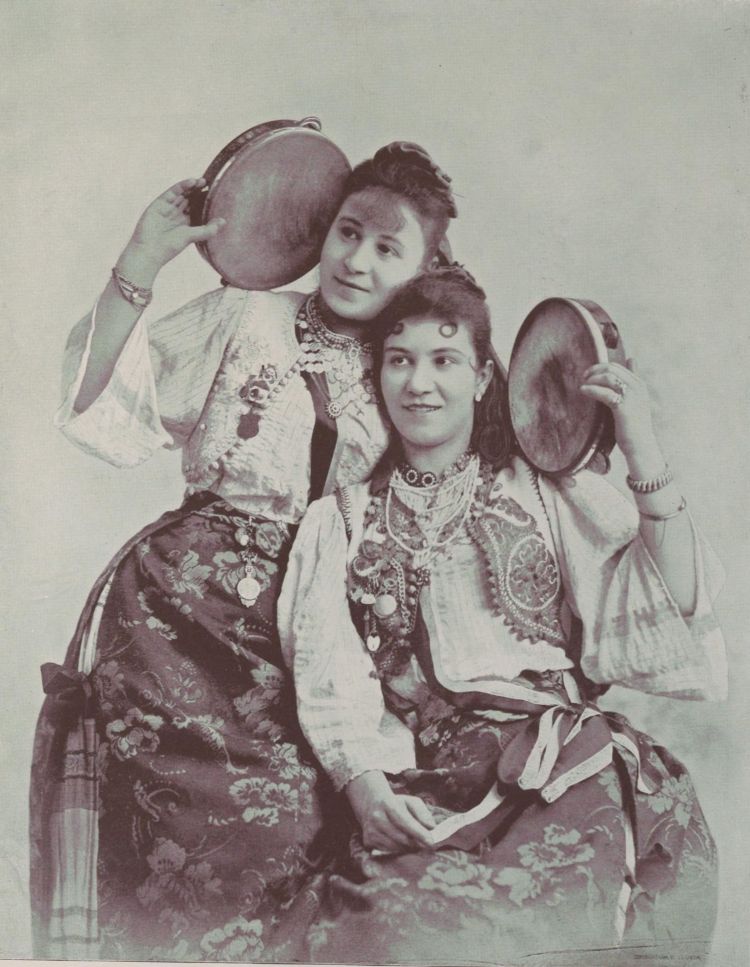
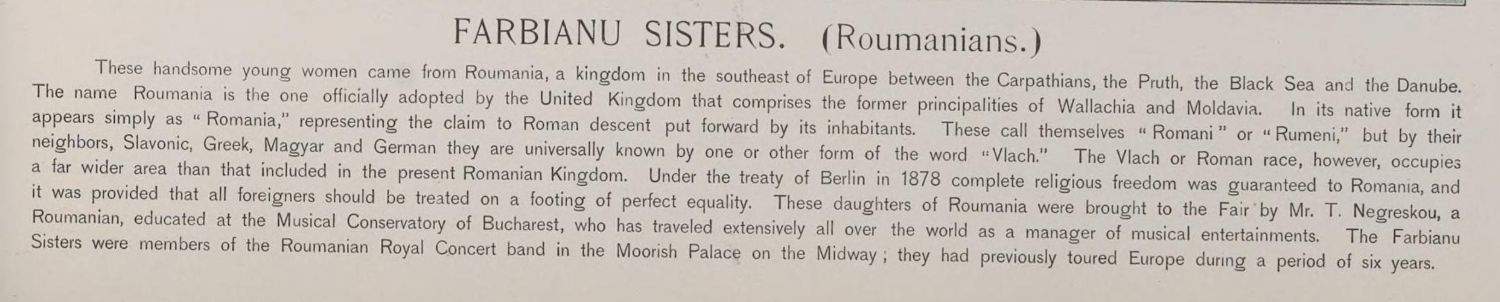
Fabianu Sisters. (Roumanians.)
The Farbianu Sisters "were members of the Roumanian Royal Concert Band in the Moorish Palace on the Midway; they had previously toured Europe during a period of six years." (Ibid, by Prof. Putnam, 1894.)
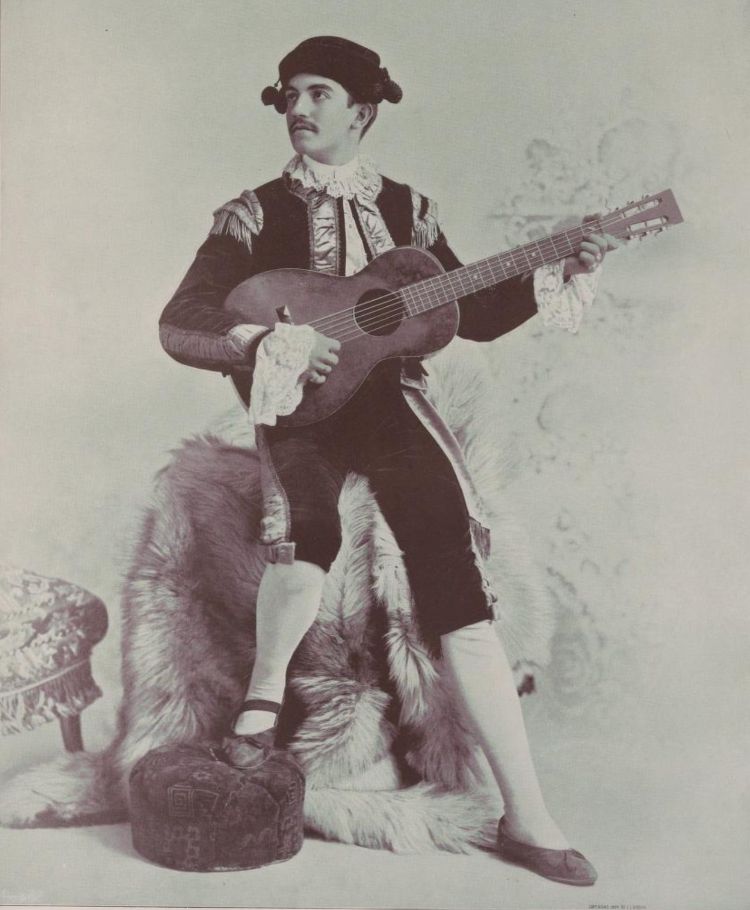
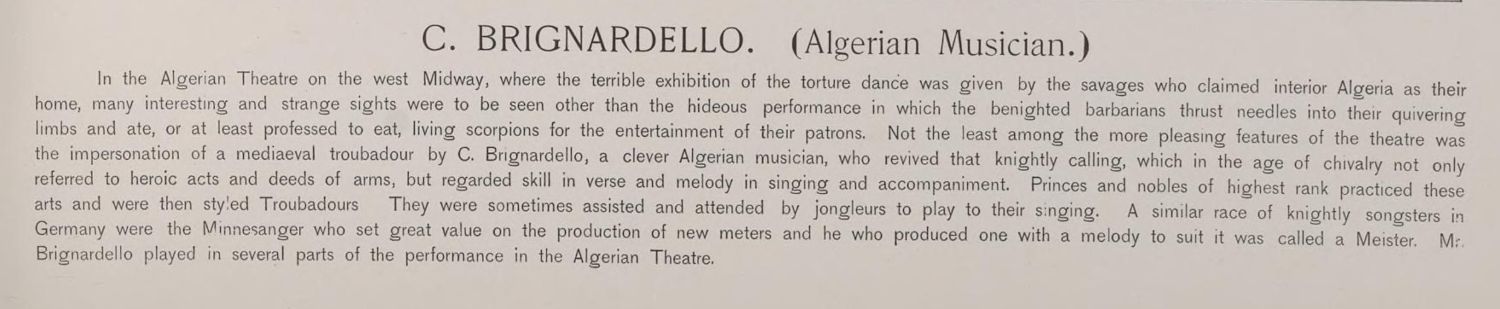
C. Brignardello. (Algerian Musician.)
C. Brignardello performed in the Algerian Theatre on the Midway and was among the more pleasing features with his "impersonation of a mediaeval troubadour" and "clever Algerian musician, who revived that knightly calling, which in the age of chivalry not only referred to heroic acts and deeds of arms, but regarded skill in verse and melody in singing and accompaniment." (Ibid, by Prof. Putnam, 1894.)
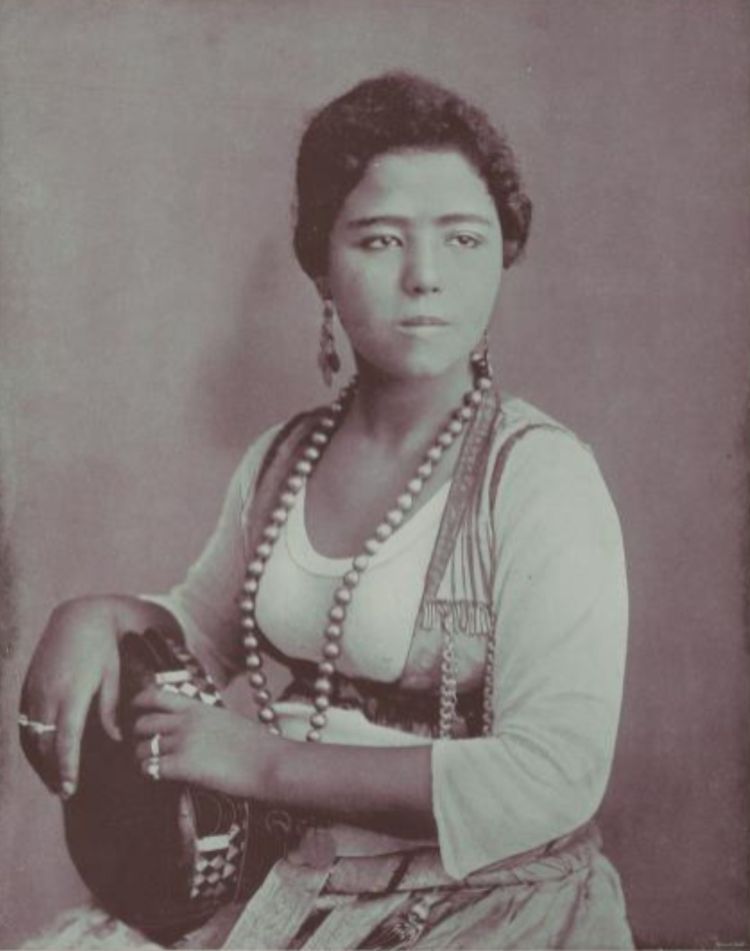
Anima. (Egyptian.)
Nothing like Anima and the "danse du ventre" had ever been seen in public in America until the Columbian Fair; and then, when the dance was first presented, the public appeared to be so thoroughly astounded that for a time no man ventured openly to criticize or denounce it...But in the end, Anima, the Egyptian, a young woman of eighteen years, was one of the most successful artists in this line on the Midway. She appeared in Cairo Street."
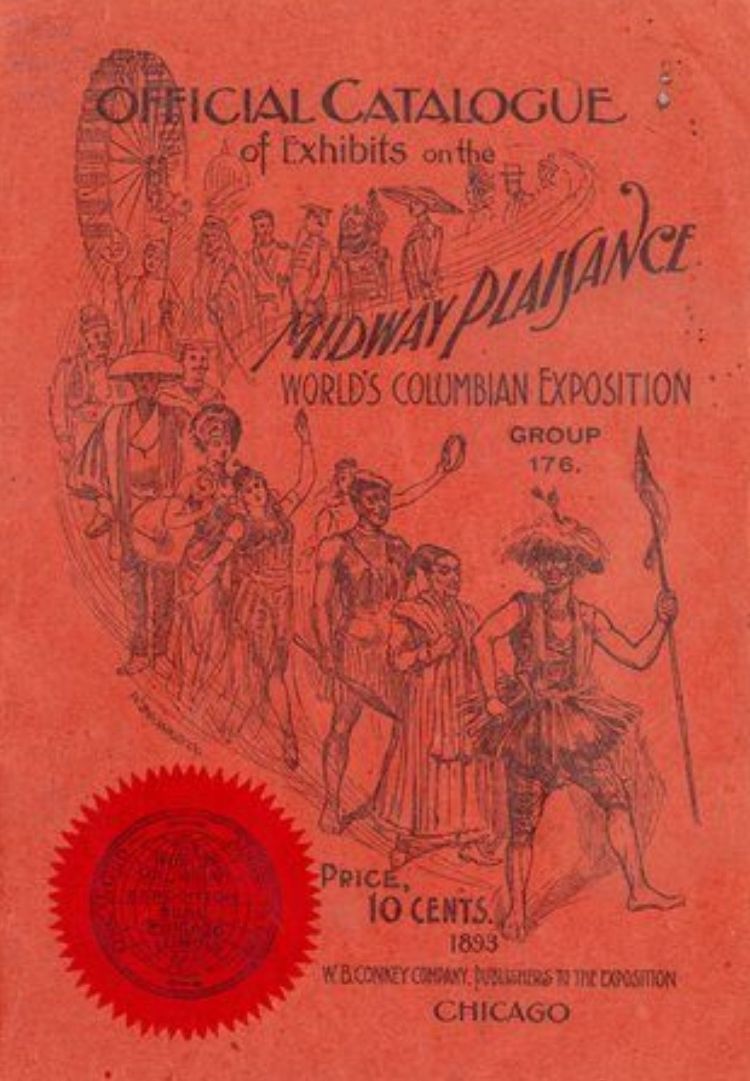
Cover of Official Catalogue of Exhibits on the Midway Plaisance, 1893. CHM, ICHi-065727.
Listen to Passamaquoddy Song of Salutation / sung by Noel Joseph (Digital restoration from digital preservation master file) Recorded in Calais, Maine on March 15, 1890 by Jesse Walter Fewkes. (Library of Congress - Jesse Walter Fewkes collection of Passamaquoddy cylinder recordings SR12)

|